
Against the Grain emerges from my ongoing effort to understand how collective authorship, cultural memory, and folk aesthetics continue to shape the ways we make and relate. Situated within a contemporary context marked by constant social and cultural reconfiguration, I’ve found myself returning to folk expression not as decorative inheritance, but as a mode of thinking, making, and relating.
The works in this exhibition were created through collaboration and exchange. They carry shared marks, contributed objects, and inherited narratives that have been passed down or passed along. These gestures form the conceptual and material ground of the project. By making them visible, Against the Grain attempts to challenge dominant frameworks of authorship and value, asserting that meaning and visibility are not exclusively produced by institutions or singular voices, but emerge through communal participation.
As I worked, I have come to understand folk aesthetics as a kind of resistance—one that sustains identity, negotiates belonging, and counters historical patterns of exclusion. Using clay, fabric, form, and paint, I treat each piece as a meeting point where multiple voices and embodied experiences intersect. I approach each work as an accumulation of gestures rather than a singular expression, where labor, care, and continuity outweigh the notion of authorship as ownership.
The exhibition is conceived as a spatial and social proposition rather than a static display. I invite the viewers to look at the works not as isolated objects, but as part of an ongoing collective process. In this way, Against the Grain functions for me as both archive and action—advancing a practice through which I can activate memory, unsettle assumptions, and approach identity as relational, open, and continually reformed.
-Samm Occeno
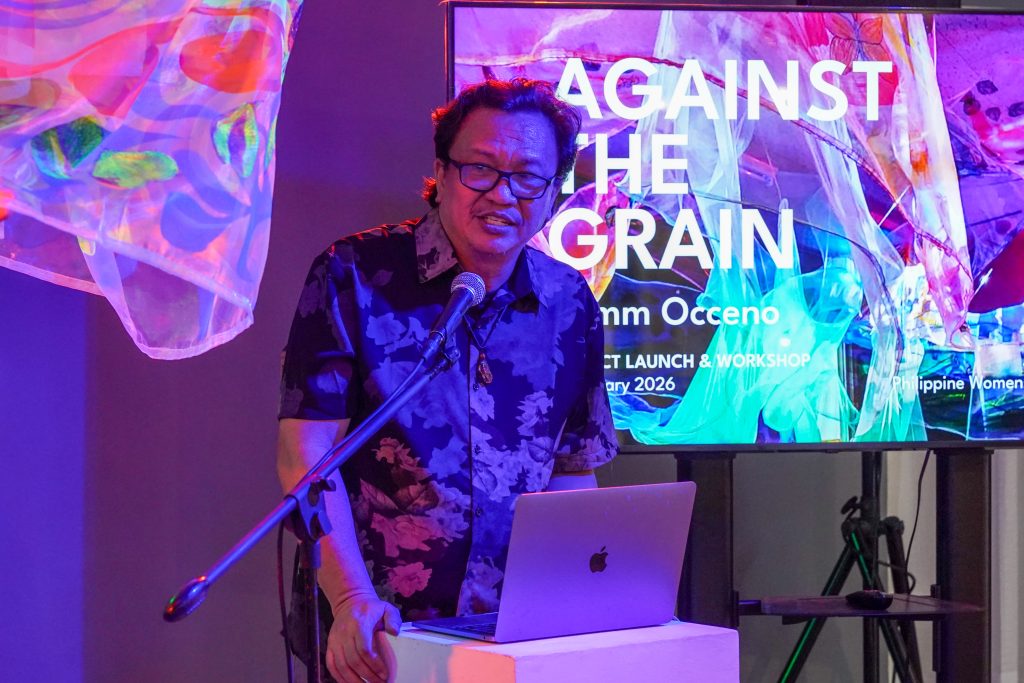
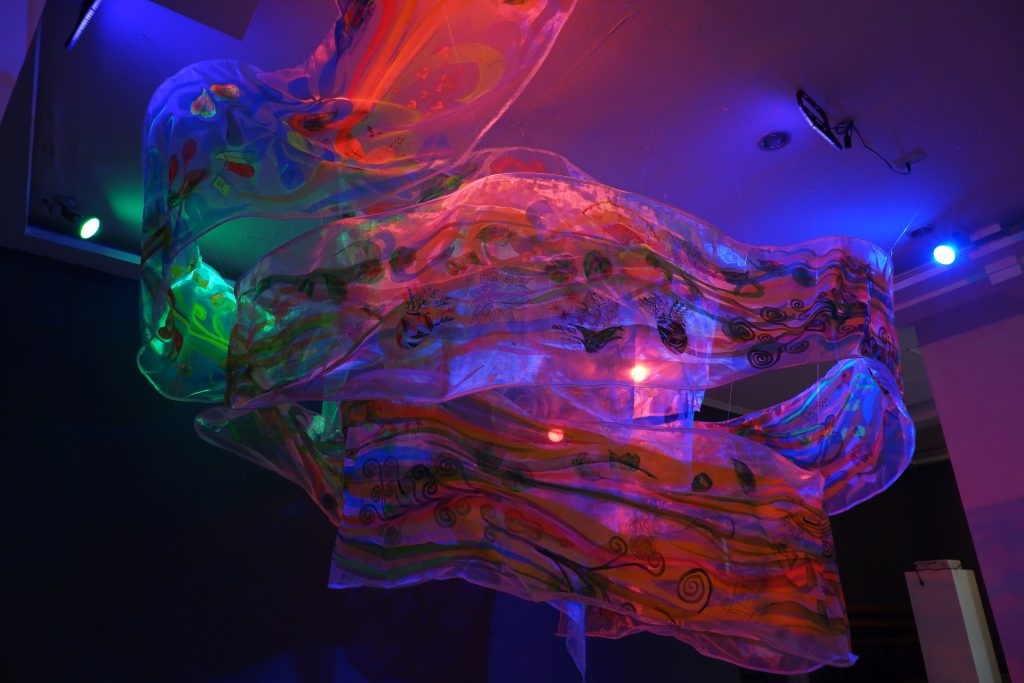
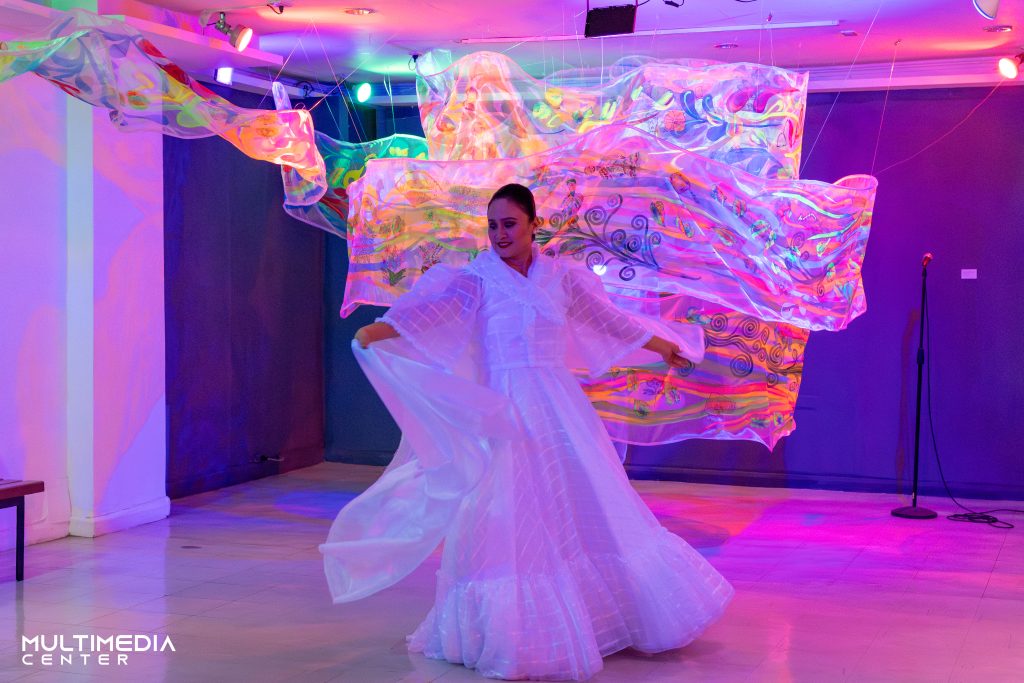
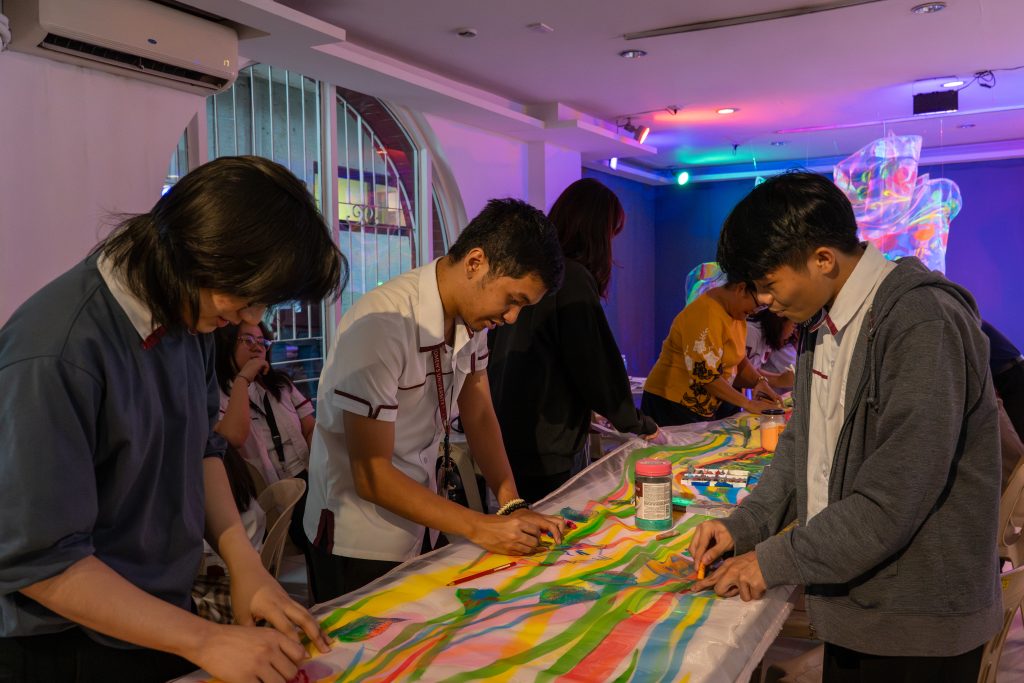
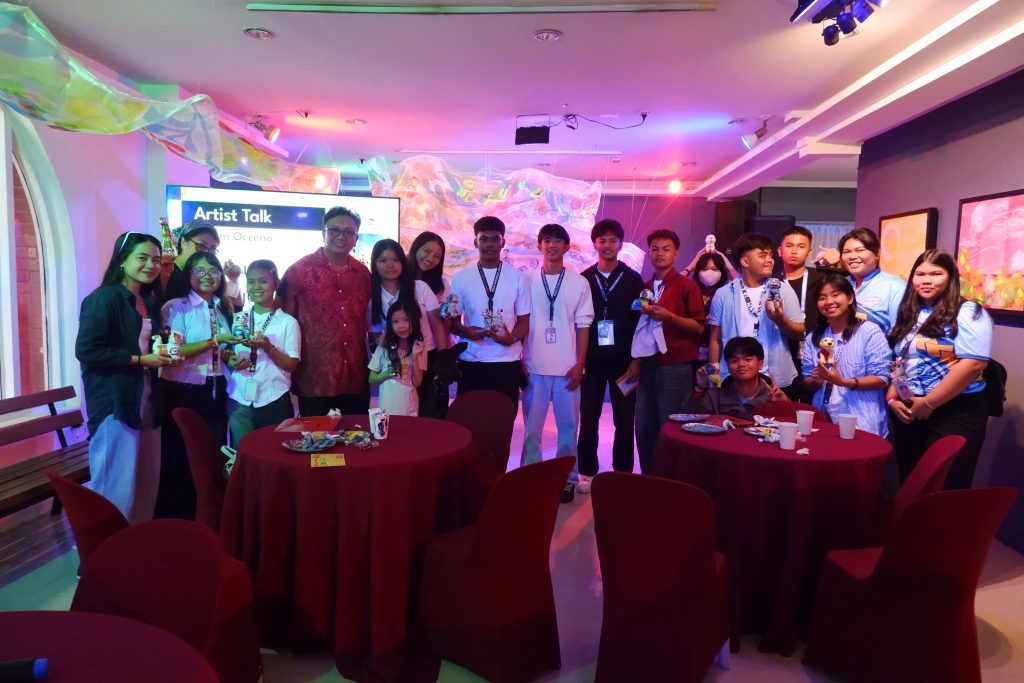
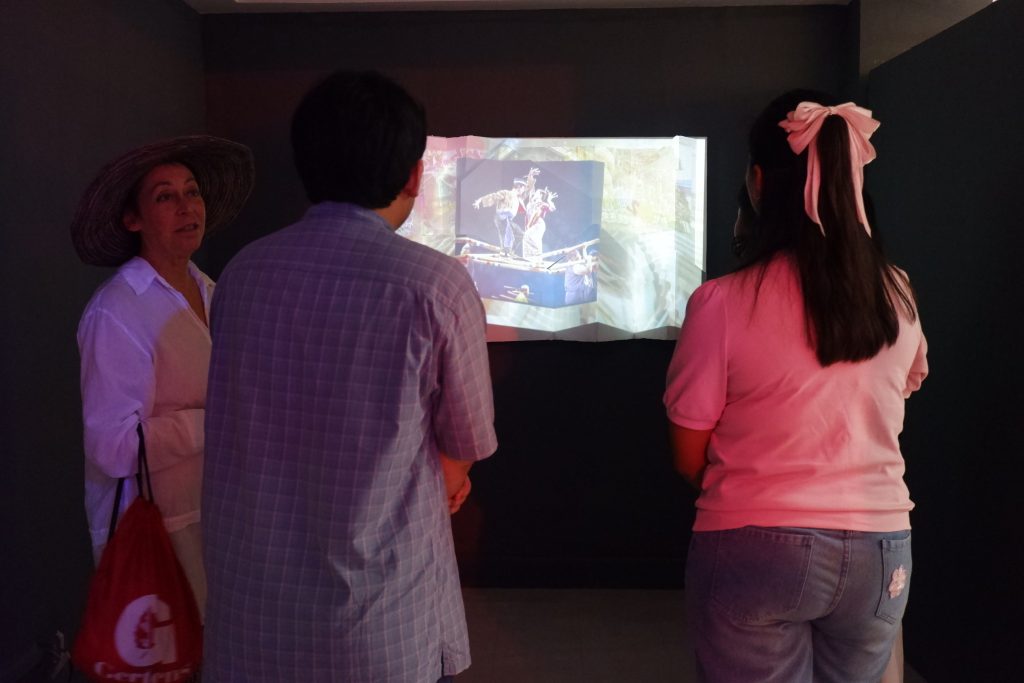
Samm Occeno’s recent body of work emerges from artistic research and sustained reflection on Filipino identity—an identity shaped by multiplicity, movement, and contradiction. Formed within an archipelagic context, identity resists singular definition and fixed narratives. Rather than resolving these tensions, Occeno allows them to remain present, approaching tradition as something continually reshaped through lived experience, popular culture, and an ongoing negotiation of self and society.
Known for his discipline in painting and materials, Occeno uses this exhibition to loosen the expectations of the resolved canvas. He turns instead to experimentation and process, developing the works through collaboration with university students, employees, and members
of the surrounding community. These shared encounters foreground identity as relational and collective, formed through dialogue rather than authored by a single voice.
The exhibition is closely tied to Occeno’s long- standing role as an educator. Having taught for decades, he situates pedagogy at the center of the project, treating teaching as a mode of artistic inquiry. The gallery becomes an extension of the classroom—a space for exchange, reflection,
and learning—where making is shaped by conversation, mentorship, and institutional context.
At the same time, the exhibition reflects critically on art institutions themselves—on who is privileged, highlighted, and sustained
within dominant systems of visibility. Set against these structures is a quieter mode of artistic production developed within the classroom
and the university, where work unfolds through time, process, and collective engagement rather than immediate market recognition. By placing market-oriented practices in conversation with critically engaged, research-driven production, the exhibition attends to the gaps between visibility and value. Moving within these gaps and resisting framed expectations opens space for artistic growth, experimentation, and alternative rhythms of practice.
As his first solo exhibition, the project also moves against prevailing expectations within the art world. It resists market-driven ideals of polish and the assumption that experimentation belongs to early career stages. Instead, Occeno draws on experience to take risks and remain open to uncertainty. Presented at the Philippine Women’s University, the exhibition draws from the university’s long-standing engagement with
arts and culture as sites of inquiry, reflection, and public responsibility, underscoring the role of university-run spaces in sustaining artistic research beyond market and institutional pressures.
-Portia Placino